‘It Was My Original Dream’ – How Owen Jones Pivoted From Rugby To Chasing Submission Grappling Glory
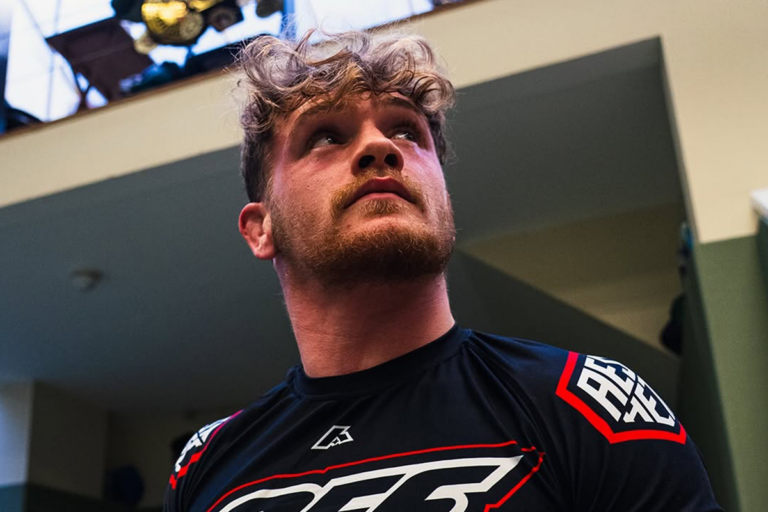
Owen Jones did not set out to conquer the submission grappling world. For most of his childhood, the English prodigy envisioned a life spent on muddy pitches chasing an entirely different athletic prize.
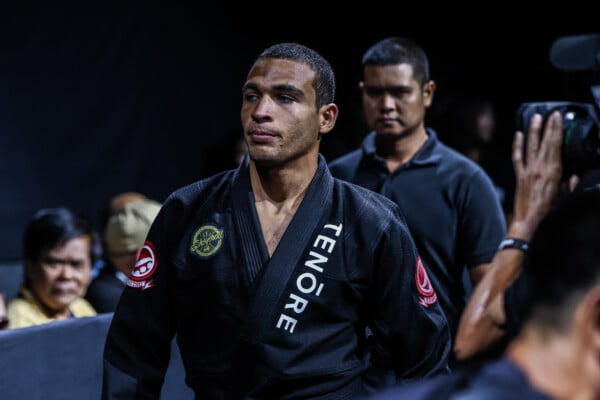
Those early aspirations will feel like a lifetime ago when the 21-year-old makes his highly anticipated promotional debut at ONE Fight Night 44: Jarvis vs. Rungrawee II on Prime Video. On Friday, June 26, he faces Fabricio “Hokage” Andrey in a featherweight submission grappling showcase, which goes down live in U.S. primetime at Bangkok’s iconic Lumpinee Stadium.
Jones never planned the road that brought him here. Instead, he navigated it one accidental step at a time. Before mastering complex leg locks on the global stage, the submission ace found his true calling and sacrificed absolutely everything to protect it.
A Scrum-Half With A Welsh Dream
Jones spent his formative years deeply entrenched in the gritty culture of English and Welsh rugby. Introduced to the grueling sport by his father, he began competing for his school side and the London Welsh club at just seven years old.
Operating at the chaotic heart of the action, he spent countless hours honing his skills in the mud. Beyond his pure love for the physical nature of the game, his initial motivations were deeply personal.
The 21-year-old recalled:
“[My father] was the one who introduced me to rugby and was the main reason why I was actually doing rugby. I was trying to make him proud, do something for him, and that was kind of why my aspirations were more towards representing Wales.”
Jones naturally gravitated toward the scrum-half position, a crucial tactical role requiring rapid decision-making, precise passing, and the bravery to direct massive forwards around the pitch.
Despite his unyielding dedication to the craft, elite rugby remains a game dictated by immense physical dimensions. He trained relentlessly to outwork his larger peers, but biology ultimately forced a painful reckoning. Accepting that reality meant abandoning the only goal he had ever known, closing a significant chapter of his young life before it could truly begin.
He said:
“That was my original dream. I wanted to be a professional little scrum-half, play for Wales. It was the original dream. Then, I found out I was 5’8, and then that was it. It went downhill from there.”
A Favor That Became His Life’s Calling
Letting go of his professional rugby ambitions did not extinguish his competitive fire. Jones recognized that he could still cherish the sport without relying on it as a viable career path.
With his primary athletic focus suddenly removed, he found himself without a defined trajectory. He certainly was not actively searching for a replacement passion when martial arts unexpectedly presented itself, leading him directly to the doors of a local Brazilian Jiu-Jitsu academy.
He said:
“My sister was actually the first one who started jiu-jitsu. She had like a little bit of ADHD, you know, she’s quite all over the place. She’s younger than me. And they were just looking for something to kind of zap her energy with, keep her occupied, and obviously jiu-jitsu was a very good thing for that.”
Acting strictly as a supportive older brother, Jones accompanied his sibling to the gym as a spectator with zero intention of stepping onto the mats himself.
However, the welcoming nature of the academy quickly changed his mind. Operating purely on a whim, he accepted an invitation to try a class — igniting a lifelong passion that would ultimately carry him to the global stage.
Jones shared:
“She got started, and then one day I just took her in. The people there were like, ‘Oh, you want to stay and try the class after hers for the teenagers?’ And I was like, ‘Yeah, why not?’ I’m here anyway. And I tried the first session, I was like, ‘Oh, this is actually pretty fun. I kind of enjoy this.’ The rest is history.”
Living In The Gym, Betting On Himself
The casual hobby rapidly morphed into a full-blown obsession, eventually leading him to Apex Jiu-Jitsu in London, where his undeniable talent began to flourish.
However, just as his technical abilities were hitting a new peak, his father lost his job and was forced to relocate back to Wales. At just 17 years old, the ascending athlete faced a genuine fork in the road. Following his family meant moving to an area entirely devoid of elite grappling infrastructure — a choice that would effectively kill his martial arts aspirations.
Refusing to surrender his momentum, he made the monumental decision to stay behind in London alone and move directly into the Apex training facility. Forced to sleep on the mats and teach classes just to afford food, he watched the sport morph from a hobby into a vital survival mechanism.
He explained:
“I had to choose the hard path, deal with things that were not too pleasant, but overall, it benefitted me in many ways. My jiu-jitsu and just my appreciation for the little things that you don’t really value too much until you don’t have them. Like when I was living in the gym, I missed having my own personal space.”
The Rugby Lessons That Shaped A Grappler
Although he competes in an entirely different arena today, the grueling lessons learned on those muddy pitches continue to dictate his modern approach to submission grappling.
Stripped of brute force, the undersized athlete survived by mastering leverage, timing, and biomechanics. Those exact defensive principles translated seamlessly to the mats, birthing his innovative ‘reverse closed guard’ and lethal leg lock attacks.
The Londoner detailed:
“Because I was smaller, I couldn’t just tackle them poorly. If I missed a tackle, I’d just get run over. So I had to learn to do it in a technical aspect, like what’s the best way to tackle someone? Right at the knees, towards the ankles, hitting them from the side, trying not to be square on with them.”
Beyond the profound technical crossover, his past gifted him with an unbreakable physical durability perfectly suited to counter an explosive powerhouse like Andrey.
Ultimately, the exact same resilience that conquered his early life obstacles remains his greatest weapon, leaving him fully prepared to break his opposition through sheer attrition in U.S. primetime.
Jones concluded:
“Rugby teaches you to be quite tough and endure through a hard 90 minutes. There is a lot of impact in regards to tackling people and being tackled. And always being one of the smallest on the pitch, I always had to be quite more physical than others in that regard.”