‘She Raised Me’ – Shozo Isojima Honors Grandmother Ahead Of Eduard Folayang Showdown At The Inner Circle 21
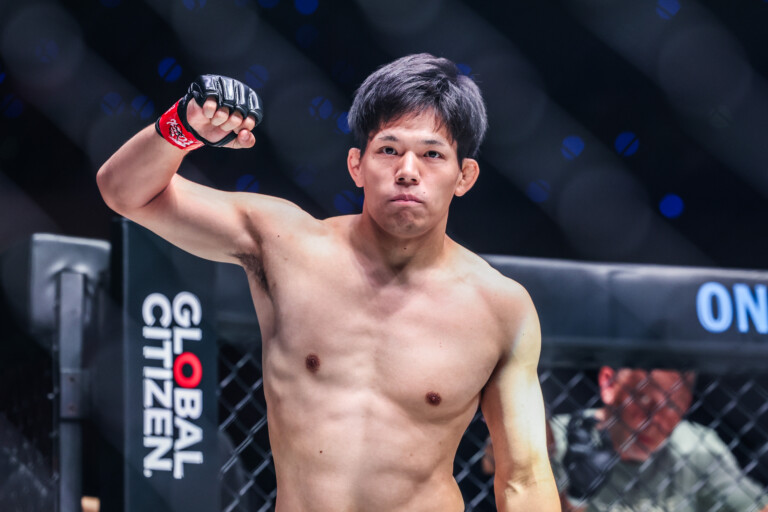
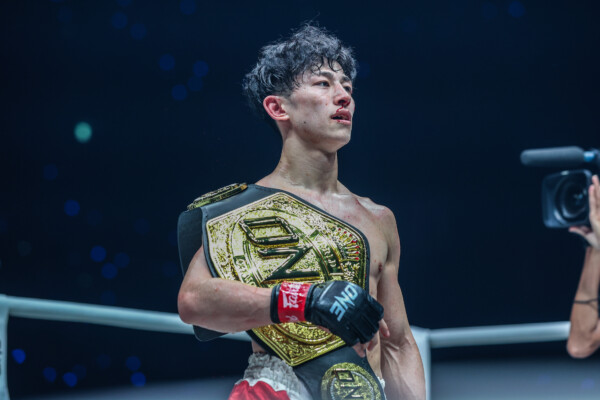
Long before he steps into the ring against an absolute icon of the sport, Shozo “Great Teacher” Isojima learned his most crucial life lessons at home — from a woman who never once put on a pair of four-ounce gloves.
The 28-year-old Japanese standout returns to action in a high-stakes lightweight MMA contest against Filipino martial arts pioneer and former three-time ONE Lightweight MMA World Champion Eduard “Landslide” Folayang.
The co-main event blockbuster takes center stage at The Inner Circle 21 on Friday, July 10, streaming live in Asia primetime from Bangkok’s legendary Lumpinee Stadium via live.onefc.com.
It represents the absolute biggest test of Isojima’s professional career — a golden opportunity to pit his impressive 6-2 record against a marquee name that helped define a generation of Asian mixed martial arts.
But ahead of the most significant battle of his life, the N-Trust representative chose to reflect deeply on the single person who has been in his corner since before he could even remember: his beloved grandmother.
Raised By A Mother’s Substitute
Isojima’s parents divorced when he was incredibly young. What easily could have devolved into a story defined by bitter absence instead became one anchored by the presence of a single, steady figure who filled the void without a shred of hesitation.
His father worked constantly to support the household and was rarely home, leaving Isojima’s grandmother to take on a developmental role far beyond what grandparents typically shoulder. Alongside his older brother and sister, Isojima grew up under her roof and under her care, in every sense of the word.
He explained:
“Since I was very young, my parents divorced, and my father and grandmother raised me. My father was basically never home because of work, so it was just me, my grandmother, and my two siblings. The three of us were basically raised by my grandmother.
“She really raised me as a mother’s substitute. Yes, all the housework and chores – she did everything.”
‘Get Strong Enough To Fight Back’
Every child eventually faces a defining moment where the outside world feels much bigger and harder than they are prepared to handle. For Isojima, that reality struck in middle school when he took up judo and quickly discovered he possessed no natural, fluid gift for the martial art.
The initial results were deeply humbling. Practice after practice, Isojima found himself completely outmatched, and the long walk home became a familiar routine of frustration and heavy tears.
Instead of offering hollow sympathy, his grandmother refused to let him wallow in self-pity. She gave him something far more useful: a blunt, powerful directive that permanently reframed how he viewed his own struggles — one he still actively carries with him as an elite professional fighter today.
He recalled:
“When I was in middle school doing judo as a club activity, I wasn’t very strong at judo at all, so I’d come home every day getting beaten up and crying. Even then, she’d tell me things like ‘if you’re going to cry about it, get strong enough to fight back.’ She said that to me a lot.”
A Worried But Watching Grandmother
While judo successfully carried Isojima through his formative school years, his evolutionary path eventually led him straight into professional MMA — a decision that did not sit easily with the matriarch who raised him. Where judo was a structured, traditional discipline she understood, the unforgiving world of cage fighting looked like an entirely different beast altogether.
Her deep maternal concern has never fully dissipated. Even now, with her grandson actively competing on the global stage, she still voices her protective worries every chance she gets, permanently torn between wanting him to achieve greatness and wanting him to remain entirely safe.
He said:
“She said something like ‘it’s dangerous, you should stop.’ She still tells me to stop even now. She [also] tells me to do my best, but she’s definitely worried.”
Distance, Money, And Gratitude
Isojima’s rapid rise through the global ranks has brought financial rewards that would have been completely unimaginable during those lean, hard years growing up in the Mie Prefecture. But even with significantly more resources at his disposal, the grueling realities of a full-time fighting career mean he and his grandmother remain physically distant for most of the calendar year, sharing face-to-face time only once or twice annually.
That physical distance has never dulled his fierce desire to repay everything she sacrificed for his future. When ONE Championship handsomely rewarded his promotional debut victory with a coveted US$50,000 performance bonus, his very first instinct was to share that newfound wealth with the person most responsible for shaping his character.
Her heartwarming response, however, revealed exactly the kind of innate selflessness that defined her role in his upbringing from day one.
He shared:
“Well, I only see her once or twice a year. She lives a bit far away, so we don’t see each other much. When I got the $50,000, I thought about sending her something nice, but she said she didn’t need that, to use it for myself instead.”
Lessons For The Next Generation
Having grown up without a consistent parental presence at home, Isojima carries a crystal-clear sense of exactly what he wants his own future family to look like when the time comes.
The emotional gaps left by his parents’ early divorce taught him, above all else, what structural cycles he refuses to repeat. He wants to be present in a way his own parents could not be, and he directly credits his grandmother with providing the ultimate blueprint for the resilience he hopes to pass down to his own children.
He concluded:
“Having a family, I haven’t really thought about that much yet, but, well, since my own parents divorced, there were a lot of times growing up when a parent wasn’t around at home. I don’t want that to happen with my own family. I want to properly spend time with my children.
“Also, what my grandmother always told me was to build the strength to live for myself, the ability to sustain my own life on my own. That was her teaching, so if I have children someday, I’d like to pass that on to them.”