‘My Heart Belonged On A Different Stage’ – How Freddie Haggerty Traded Acting Career For Martial Arts
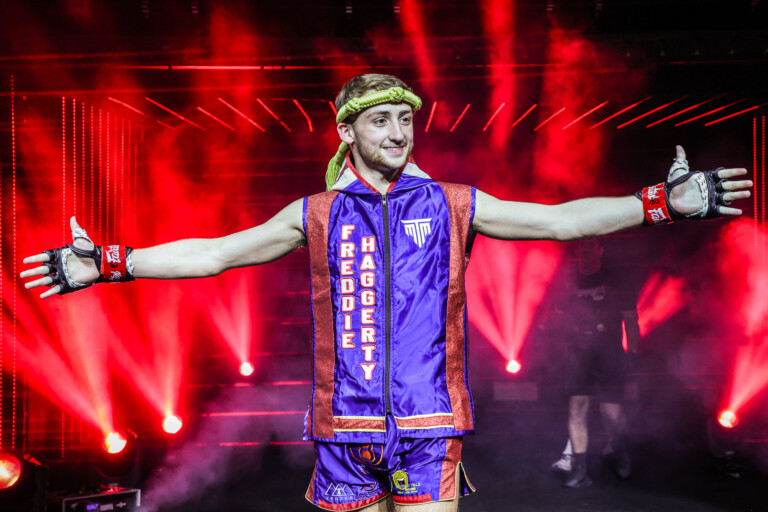
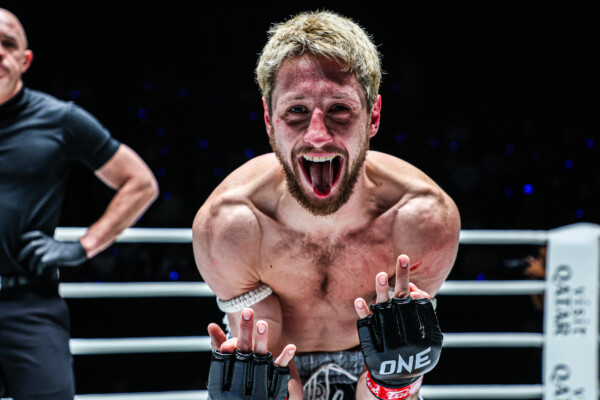
Some fighters take the long road to the bright lights of the global stage. English striking star Freddie Haggerty already knew them by heart.
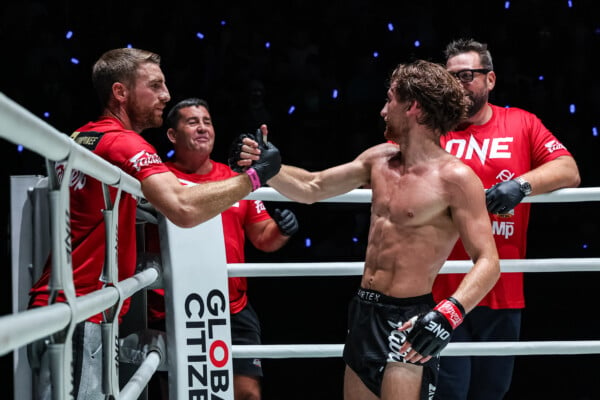
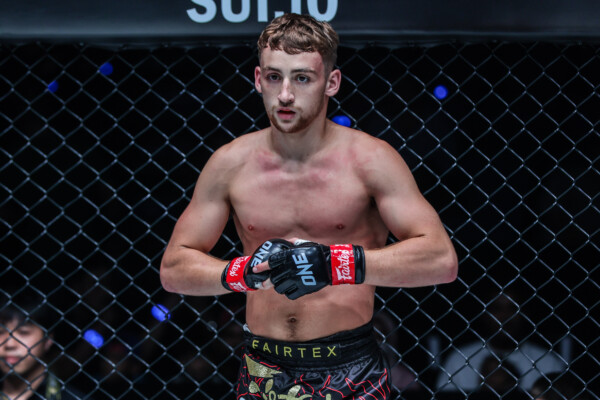
The 21-year-old returns to action in a high-stakes strawweight Muay Thai matchup against WBC Muay Thai World Champion Yonis Anane at The Inner Circle. The blockbuster event broadcasts live from Bangkok’s legendary Lumpinee Stadium this Friday, May 22, available exclusively to monthly subscribers on live.onefc.com.
He has built his early professional reputation on explosive finishes, sharp ring craft, and a presentation under the lights that feels remarkably composed for a fighter still in his early twenties.
There is a reason that supreme composure runs so deep. Long before Haggerty ever walked toward a ring, he was charming massive audiences across London’s West End up to five nights a week.
The Stage Before The Spotlight
The West End is London’s answer to Broadway — a collection of roughly 40 theaters widely regarded as the absolute highest level of commercial theater in England.
His journey began nowhere near a ring or a grand stage. A young Freddie Haggerty tagged along to dance school with his older sister, with absolutely no intention of ever performing himself. Then, a single audition opportunity arrived out of nowhere.
He took it, and the rest, as they say, is history.
He recalled:
“I had a sister about a year older than me. She went to dance school, and one day, I went with her. We were coming off a holiday that day. I’d never acted, never sung in my life – just danced – and the dance school said, ‘We’ve got an audition for you. Go for it, see what happens.’
“I did well, I guess…and somehow, I ended up getting the role of Eric in Matilda the Musical, and stuck doing that for a year.”
Eric Shaffernickle is one of Matilda’s sweet, timid classmates at Crunchem Hall. He is the smallest student in the class, the boy with the very first solo line of the entire show, and the unforgettable victim of Miss Trunchbull’s notorious ear-stretching scene.
Haggerty was just eight years old when he landed the prominent role. A couple of years later, Charlie and the Chocolate Factory came calling. This time, he played Mike Teavee, a gaming-obsessed kid who gets sucked into a television set near the end of the second act.
His schedule was incredibly packed. On top of that, living roughly 12 kilometers from the West End meant that he was practically on standby most of the time.
Haggerty said:
“I would do Monday or Tuesday at night, and then a double show on Wednesday. So that’s four shows in one week, and on top of that, there’s the shows on the weekend. Besides, a lot of the kids lived far, so I would always be on call.
“So there’d been many times like I was at birthday parties and they’d say, ‘You’ve got to come here,’ and I’d be fuming. But I got it done anyway because I never say no to opportunities.”
The Calling He Could Never Walk Away From
There was always going to be a fundamental problem with Freddie Haggerty becoming a theater star, however. The strict contracts he had to sign with the West End productions came with a clause that expressly ruled out the very thing he had always wanted to pursue: becoming a fighter.
For the son of a former fighter and the younger brother of a future multi-time ONE World Champion — reigning ONE Bantamweight Kickboxing World Champion Jonathan “The General” Haggerty — that restrictive condition was non-negotiable in the wrong direction.
He told onefc.com:
“Though I showed up, I was always moaning cause I wasn’t allowed to fight. I wasn’t allowed to get bruises and whatnot. It was frustrating, but I had to do what I had to do.
“So, I was there for a year. And after that Eric role, we flew to Thailand. I headed out here for training, had a fight at nine years old, and I ended up loving every bit of it.”
The Thailand trip during the brief gap between his Matilda the Musical and Charlie and the Chocolate Factory deals was the exact moment everything became crystal clear.
It was his very first fight, and he was instantly hooked. He returned to England and diligently completed his role as Mike Teavee. But when the production offered him an additional four months to continue his highly successful run, he turned them down without a single moment of hesitation.
The Londoner shared:
“I just said, ‘Well, no, I don’t want to do it no more.’ I actually said, my exact words, ‘I want to be a normal kid.’ When I say a normal kid, I mean I just want to fight. For me, fighting is just something so normal and natural.
“It was something already there. My father had laid the path. My brother, too. Naturally, that was always going to be in my blood.”
His castmates were heading in entirely different directions. Some formed music bands, while most continued their theater careers through different productions across the West End and beyond.
Young Haggerty was the distinct outlier in a roomful of entertainers. He was the kid who quietly knew his preferred art form would involve a good ol’ scrap.
The Team Underground and Knowlesy Academy star continued:
“My heart belonged on a different stage. I always had a dream. I knew from a young age what I wanted to do. Not just because of what my brother had done, but because I just loved it.
“Saying goodbye to acting was probably one of the easiest decisions I’ve had to make in my life. But, obviously, for my parents, it wasn’t so easy. My mum was heartbroken. But they didn’t stop me from pursuing what I would describe as my calling.”
The West End Lessons He Carries Into The Circle
For Freddie Haggerty, walking away from the West End did not mean entirely forgoing what the experience had given him.
The biggest stages in martial arts are not so different from the grandest theaters in London. Both require him to step into a blinding spotlight in front of thousands of eyes, deliver a craft that has been meticulously rehearsed for years, and flawlessly execute under pressure with every single detail mattering.
He explained:
“Given how big the theatres are, I think I learned from a young age how to cope with big audiences. It helped me to block out the noise and block out the fact that people are actually sat there and staring at you.
“So, I could fully focus on what needs to be done at hand. I don’t need to get distracted by noises, and I could just focus solely on my performance and getting the job done. I believe the same applies when fighting. I’m just locked in on myself and my opponent. I never let the fans distract me.”
Blocking out the noise was only one of the invaluable gifts the West End left behind. The other arrives in every single fight-week build-up.
The modern combat sports landscape heavily requires that a young fighter be as comfortable in front of a camera lens as he is performing inside the ring, and that particular part of the job felt incredibly familiar.
Haggerty concluded:
“How I’m able to handle the media perhaps goes back to those early days of acting. But being a fighter for quite a long time, too, has helped with my transition here into ONE Championship.
“If I could go back, though I didn’t entirely love it as much, I think I’d have not changed a thing about it. I met a lot of people, and eventually figured that, ‘Yeah, maybe my kinda art involves me throwing punches with someone else.'”